
Our Blogs
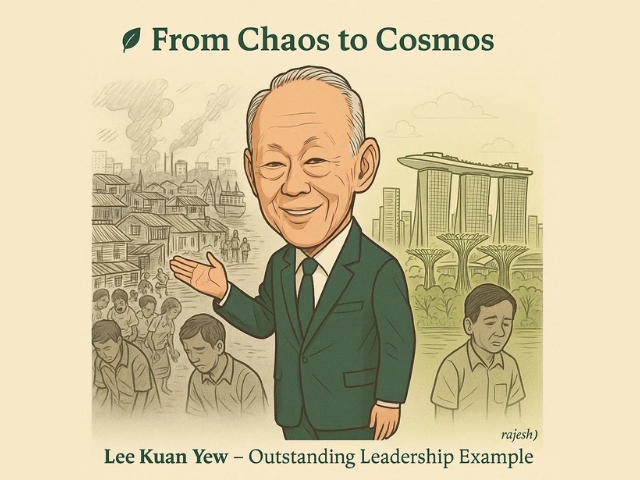
🌿 𝗙𝗿𝗼𝗺 𝗖𝗵𝗮𝗼𝘀 𝘁𝗼 𝗖𝗼𝘀𝗺𝗼𝘀: 𝗟𝗲𝗲 𝗞𝘂𝗮𝗻 𝗬𝗲𝘄’𝘀 𝗢𝘂𝘁𝘀𝘁𝗮𝗻𝗱𝗶𝗻𝗴 𝗟𝗲𝗮𝗱𝗲𝗿𝘀𝗵𝗶𝗽 𝗘𝘅𝗮𝗺𝗽𝗹𝗲
When Singapore separated in 1965, it stood on the edge of uncertainty — a small island with no resources, unemployment, and racial divides. What seemed like chaos could have ended in collapse.
But under Lee Kuan Yew’s leadership, Singapore became one of the finest examples of transforming chaos into cosmos:
•From slums to world-class housing 🏙
•From corruption to clean governance ⚖
•From dependency to a global trade hub 🌏
•From fragmentation to unity 🇸🇬
Today, Singapore shines as proof that true leadership is not about inheriting order — it is about creating it out of disorder.
⸻
🌏 𝗧𝗵𝗲 𝗣𝗵𝗶𝗹𝗼𝘀𝗼𝗽𝗵𝘆
I call this the “Chaos → Cosmos” principle.
It applies not only to nations but also to brands, organizations, and human journeys:
•A brand must move its customers from confusion (chaos) to trust (cosmos).
•An entrepreneur must turn uncertain beginnings into coherent growth.
•Humanity itself must rise from conflict into harmony.
Leadership is not about short-term tactics — it is about timeless philosophy.
⸻
💭 𝗔 𝗥𝗲𝗳𝗹𝗲𝗰𝘁𝗶𝗼𝗻
Sometimes I wonder — if there was a Nobel Prize for Leadership & Nation-Building, why was it never given to Lee Kuan Yew?
He did not just govern; he transformed chaos into cosmos, leaving behind a timeless template for nations, organizations, and humanity.
⸻
✒ 𝗥𝗮𝗷𝗲𝘀𝗵 𝗔𝗴𝗴𝗮𝗿𝘄𝗮𝗹
India’s Exclusive Brand Philosophy Mentor
Search Posts
Recent Posts
𝗔 𝗪𝗼𝗿𝗹𝗱 𝗶𝗻 𝗦𝗲𝘃𝗲𝗿𝗲 𝗧𝘂𝗿𝗺𝗼𝗶𝗹
January 5, 2026
No Comments
𝗪𝗵𝘆 𝗛𝗶𝗿𝗶𝗻𝗴 𝗜𝗻𝗱𝗶𝗮𝗻𝘀 𝗔𝗻𝘆𝘄𝗵𝗲𝗿𝗲 𝗶𝗻 𝘁𝗵𝗲 𝗪𝗼𝗿𝗹𝗱 𝗜𝘀 𝗮 𝗦𝘁𝗿𝗮𝘁𝗲𝗴𝗶𝗰 𝗔𝗱𝘃𝗮𝗻𝘁𝗮𝗴𝗲
January 2, 2026
No Comments
🌿 𝗙𝗿𝗼𝗺 𝗖𝗵𝗮𝗼𝘀 𝘁𝗼 𝗖𝗼𝘀𝗺𝗼𝘀: 𝗟𝗲𝗲 𝗞𝘂𝗮𝗻 𝗬𝗲𝘄’𝘀 𝗢𝘂𝘁𝘀𝘁𝗮𝗻𝗱𝗶𝗻𝗴 𝗟𝗲𝗮𝗱𝗲𝗿𝘀𝗵𝗶𝗽 𝗘𝘅𝗮𝗺𝗽𝗹𝗲
November 18, 2025
No Comments
🌿 Rajesh Aggarwal’s 8 Theories of Brand Philosophy™
November 18, 2025
No Comments
🌍 𝗙𝗿𝗼𝗺 𝗗𝗼𝗺𝗶𝗻𝗮𝘁𝗶𝗼𝗻 𝘁𝗼 𝗘𝗹𝗲𝘃𝗮𝘁𝗶𝗼𝗻: 𝗖𝘂𝗿𝗿𝗲𝗻𝗰𝘆, 𝗖𝗼𝘂𝗻𝘁𝗿𝗶𝗲𝘀 & 𝘁𝗵𝗲 𝗖𝗼𝗹𝗹𝗲𝗰𝘁𝗶𝘃𝗲 𝗙𝘂𝘁𝘂𝗿𝗲
November 12, 2025
No Comments